The OpenClaw Ecosystem for Scientific Research
A curated dataset and discovery platform for OpenClaw AI agent projects — spanning bioinformatics, biomedicine, drug discovery, and multi-agent learning. From lightweight assistants to self-evolving research systems.
OpenClaw Ecosystem Projects
From the full-featured core platform to ultra-lightweight edge agents, from self-evolving research systems to multi-omics pipelines.
Core Platform & Lightweight Variants

OpenClaw
The core platform. Personal AI assistant on your own devices. 25+ messaging channels (WhatsApp, Telegram, Slack, Discord, Signal, iMessage, Teams, Matrix, Feishu, LINE, WeChat, QQ). Voice on macOS/iOS/Android. Live Canvas rendering. Gateway control plane. 358K+ stars.

Hermes Agent
The self-improving AI agent by Nous Research. Built-in learning loop — creates skills from experience, improves them during use, nudges itself to persist knowledge, cross-session recall via FTS5 search. 200+ models via OpenRouter. 6 terminal backends (local, Docker, SSH, Daytona, Singularity, Modal). Telegram/Discord/Slack/WhatsApp/Signal. Cron scheduler. Subagent delegation. Research-ready with batch trajectory generation and Atropos RL environments.

Pi
Independent AI agent harness mono repo from earendil-works (Mario Zechner / badlogic). Includes pi-ai (unified multi-provider LLM API: OpenAI, Anthropic, Google), pi-agent-core (runtime with tool calling + state), pi-coding-agent (interactive CLI), and pi-tui (terminal UI with differential rendering). Companion pi-chat for Slack/chat workflows. Strong supply-chain hardening (pinned deps, min-release-age). Foundation under feynman → Darwin.

NanoBot
Ultra-lightweight personal AI agent — 99% fewer lines of code than OpenClaw. v0.1.5: Dream skill discovery, mid-turn follow-up injection, WebSocket channel, context auto-compact, notebook editing, multiple MCP servers. Supports Feishu streaming, QQ, WeCom, Kagi web search. From HKUDS (ClawTeam team). 39K+ stars.

ZeroClaw
Fast, small, and fully autonomous AI assistant infrastructure. Deploy anywhere, swap anything. Written in Rust with extreme performance focus — the infrastructure layer for self-hosted AI agents.
NanoClaw
Lightweight alternative to OpenClaw that runs in containers for security. Connects to WhatsApp, Telegram, Slack, Discord, Gmail. Built on Anthropic Agents SDK with memory and scheduled jobs.

PicoClaw
Tiny, fast, and deployable anywhere. Ultra-efficient AI assistant written in Go by Sipeed. Designed for edge devices and resource-constrained environments. Inspired by NanoBot.

NemoClaw
NVIDIA official reference stack for running OpenClaw securely inside NVIDIA OpenShell sandbox. Managed inference with Nemotron open-source models. Essential for labs running autonomous agents on GPU servers.
OpenHarness
Open Agent Harness from HKUDS (NanoBot team). Runtime environment and execution framework for AI agents. 615 stars in 1 day.
IronClaw
Rust implementation of OpenClaw focused on privacy and security. Memory-safe architecture with Rust's ownership model, built by NEAR AI. Ideal for sensitive research environments requiring data isolation and high performance.
NullClaw
Fastest, smallest, fully autonomous AI assistant infrastructure written in Zig. Part of the Null ecosystem (NullHub UI, NullWatch observability, NullTickets task tracking). Extreme performance with minimal resource footprint.
autoagent
Autonomous harness engineering. Self-configuring agent runtime that adapts to your workflow. 560 stars in 24 hours.

FastClaw
Faster and lighter OpenClaw alternative written in Go. Focused on speed, simplicity, and low resource usage. Quick to deploy for researchers who want minimal setup overhead.
EdgeClaw
Edge-Cloud Collaborative AI Agent built on OpenClaw — bringing the Claude Code experience to open source. v2.0 features ClawXMemory (multi-layered structured long-term memory with proactive reasoning) and ClawXRouter (LLM-as-Judge cost-saving router achieving 58% savings). Three-tier privacy (S1 Passthrough / S2 Desensitization / S3 Local), visual Dashboard, zero-config setup. By THUNLP, RUC, OpenBMB.
MicroClaw
Agentic AI assistant built with Rust. Runs on <1MB RAM targeting $2-5 MCU hardware like ESP32. The smallest member of the Claw family for sensor-level embedded AI.
Team & Orchestration
Multica
Open-source managed agents platform. Turn coding agents into real teammates — assign tasks, track progress, compound skills. Agents show up on boards, post comments, report blockers autonomously. Works with Claude Code, Codex, OpenClaw. Self-hosted or cloud (multica.ai).
Edict
Multi-agent orchestration inspired by China's Imperial Three Departments and Six Ministries system. 9 specialized AI agents with real-time dashboard, model config, and full audit trails. You are the Emperor — issue edicts, your AI ministers execute.
ClawX
Desktop app providing a graphical interface for OpenClaw AI agents. Turns CLI-based AI orchestration into a visual desktop experience without using the terminal.
OpenSpace
Agent optimization framework from HKUDS (NanoBot team). Makes agents smarter, lower-cost, and self-evolving. Useful for improving any science agent's performance over time.

Open Multi-Agent
TypeScript multi-agent framework. One runTeam() call from goal to result. Auto task decomposition, parallel execution. 3 dependencies, deploys anywhere Node.js runs. 4K stars in 4 days.

ClawTeam
Agent Swarm Intelligence — one command, full automation. Agents spawn swarms, delegate tasks, deliver results. File + ZeroMQ P2P transport. Compatible with Claude Code, Codex, OpenClaw, nanobot, Cursor, any CLI agent. From HKUDS. 4.8K stars.

AgentTeams
Collaborative Multi-Agent OS from the AgentScope team. Transparent, human-in-the-loop task coordination via Matrix rooms. Open-source agent team orchestration for enterprise workflows. Formerly HiClaw.

Clawith
OpenClaw for Teams. Multi-agent collaboration with persistent identity, long-term memory, and autonomous 'Aware' consciousness system. 6 trigger types: cron, once, interval, poll, on_message, webhook.
TinyAGI
Agent teams orchestrator for One Person Company. Coordinate multiple specialized agents for solo founders and indie researchers. Formerly TinyClaw.
MetaClaw (aiming-lab)
Self-learning agent that evolves from every conversation. LoRA-based continual learning + reinforcement learning, no GPU cluster needed. Supports OpenClaw, NanoBot, PicoClaw backends.

ClawManager
Kubernetes-first control plane for managing OpenClaw and Linux desktop runtimes at team and cluster scale. Web UI for multi-instance orchestration.
AlphaClaw
The ultimate OpenClaw harness. Browser-based setup wizard, self-healing watchdog, Git-backed rollback, multi-agent management, prompt hardening, and one-click Railway/Render deploy. 892 stars, 440 tests. Zero SSH rescue missions.

ClawTeam-OpenClaw
ClawTeam fork with deep OpenClaw integration. Default openclaw agent, per-agent session isolation, exec approval auto-config, production-hardened spawn backends. All upstream fixes synced.

ArgusBot
24/7 supervisor Agent for Codex CLI and Claude Code CLI. Keeps agents running, reviewing, and planning until the job is actually done. Useful for overnight experiments and long-running analysis tasks.

MagiClaw
Conversational command center for scientific agent teams. From SJTU SAI Agents. Orchestrate multiple research agents through natural language dialogue.
Biomedicine & Omics
Medical & Clinical
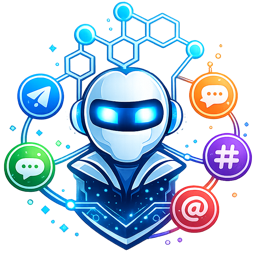
EvoScientist
Self-evolving multi-agent AI research system. Harness Vibe Research — 6 sub-agents (plan, research, code, debug, analyze, write) that evolve their capabilities over time. Built on DeepAgents framework. PyPI installable. Multi-platform: CLI, Telegram, Slack, WeChat. Apache 2.0 license.
ClawBio
The first bioinformatics-native AI agent skill library. Local-first, reproducible, built on OpenClaw. Covers genomics, population genetics, and equity-focused bioinformatics workflows.
LabClaw
Operating layer for LabOS — Stanford-Princeton AI Co-Scientists project. Automated scientific co-discovery workflows for laboratory research.
MedgeClaw
AI research assistant for biomedicine built on Claude Code with 140 K-Dense scientific skills. Real-time research dashboard, RStudio (:8787), JupyterLab (:8888), and Feishu rich card output.
BioClaw
AI-powered bioinformatics research assistant built on OpenClaw. Integrates PubMed literature search and PyMOL molecular visualization for streamlined biological research workflows.
OmicsClaw
Local-first cross-session AI assistant for life science researchers. 63 built-in skills across 6 omics domains (spatial transcriptomics, scRNA-seq, bulk RNA-seq, genomics, proteomics, metabolomics). Multi-Provider (Anthropic/OpenAI/DeepSeek/local LLM), Multi-Channel (CLI + Feishu/WeChat/Telegram sync), MCP + dynamic GitHub skill install. Persistent memory. 100% local — no data leaves your machine.
STELLA
Self-evolving multimodal agent platform for biomedical research. From Princeton/Stanford/UCLA. Published on bioRxiv and arXiv. Live demo at stella-agent.com.
HealthClaw
Open-source self-evolving personal health copilot. Medical consultation support, meal planning, report interpretation, chronic-care follow-up, wearable data analytics. Supports clinical data, medical imaging, and omics evidence. Streamlit + Feishu + CLI.

Bioinformatics & Omics

Biomni
General-purpose biomedical AI agent from Stanford SNAP Lab. Broad coverage across biomedical tasks with a unified agent architecture.

PantheonOS
Evolvable, distributed agent framework for data science from the dynamo/Spateo team. Specialized in single-cell and spatial transcriptomics workflows.

CellVoyager
AI CompBio agent that autonomously analyzes biological data and generates new insights. From Stanford Zou Group. Published in Nature Methods. Specializes in scRNA-seq with self-debugging and hypothesis generation.

AutoBA
An AI agent for fully automated multi-omic analyses. Supports RNA-seq, scRNA-seq, spatial transcriptomics, WGS/WES, and ChIP-seq with automated code repair.
SpatialAgent
An AI agent for spatial biology by Genentech. Processes multimodal spatial genomics data for research insights.
CRISPR-GPT
LLM agent for CRISPR genome engineering. Assists with guide RNA design, experiment planning, and protocol optimization.
BioMedAgent
Biomedical AI agent published in Nature Biomedical Engineering. Dormant since Feb 2025 but with top-tier publication backing.

BioMaster
AI agent system for various bioinformatics tasks with specialized agent coordination. From the same group as POPGENAGENT.
BioDSA
Framework for vibe-prototyping AI agents for biomedicine. BaseAgent foundation with Docker-sandboxed code execution, LangGraph state-graph workflows, and 17+ knowledge-base tools (PubMed, ChEMBL, UniProt, Open Targets, Ensembl, cBioPortal, Reactome). Ships 8 published agents — DSWizard (Nature BME), DeepEvidence (Nature Machine Intelligence 2026), TrialGPT, AgentMD, GeneAgent, TrialMind-SLR, InformGen, Virtual Lab — plus 10 benchmarks with 1,900+ tasks including BioDSA-1K (1,029 hypothesis-validation tasks). Skill packs install into Claude Code, OpenClaw, Cursor, Codex CLI, and Gemini CLI. From Keiji AI.
NeuroClaw
Neuroscience AI agent from CUHK AIM Group. Early stage — no description yet, actively developed.
Bioinfor-Claw
24/7 bioinformatics copilot — 50 specific skills across 10 application scenarios (data access, multi-omics, CRISPR, gene-list, structure, ML, plotting, literature, lab tracking). Dual nature: standalone agent with browser-based chat UI + modular SKILL.md library that plugs into OpenClaw, Claude Code, or any custom agent. Multi-LLM backend (Anthropic, OpenAI, Google, Mistral, MiniMax, OpenAI-compatible).
Drug Discovery & Molecular
ChemCrow
Pioneering chemistry AI agent (2023) from ur-whitelab. LangChain-based, cited in official docs. The foundational project that inspired MDCrow and the broader science agent movement.
Virtual Lab
A virtual lab of LLM agents for science research. Multi-agent system for nanobody design with principal investigator agent coordination.
BloClaw
Omniscient multi-modal agentic workspace for scientific discovery. Cheminformatics (RDKit), protein folding (ESMFold), molecular docking, autonomous RAG. XML-Regex dual-track routing, runtime sandbox for data visualization. From Beijing 1st Biotech + PLA General Hospital.
MDCrow
Molecular dynamics simulations with an LLM agent. Automates simulation setup, execution, and analysis using natural language.

OriGene
Self-evolving virtual disease biologist for mechanism-guided therapeutic target discovery. Automates disease mechanism analysis and drug target identification.
ChemGraph
Agentic framework for computational chemistry and materials science workflows. From Argonne National Laboratory (ALCF). Orchestrates chemistry simulation pipelines.
DrugClaw (DrugClaw)
AI Research Assistant for Accelerated Drug Discovery. Built with Rust for high performance. Covers compound screening, ADMET prediction, and lead optimization workflows.
DrugClaw (QSong)
Agentic RAG for drug intelligence: 57 skills, 15 task categories — DTI, ADR, DDI, pharmacogenomics, repurposing. Powered by LangGraph.
AIAgents4Pharma
Multi-agent platform for pharmaceutical R&D. Covers drug discovery, drug development, and clinical pipeline automation. Built by VirtualPatientEngine.
ChemClaw
Curated skills package for chemistry-focused AI workflows. Installable modularly via npx with stable and experimental skill tiers.
General Research
Autonomous End-to-End Research
autoresearch
By Andrej Karpathy. Give an AI agent a small but real LLM training setup and let it experiment autonomously overnight. Single GPU, ~100 experiments/night. Works with Claude Code, Codex, or any agent.
DeepResearch
Tongyi Deep Research by Alibaba. Leading open-source deep research agent (30.5B params, 3.3B activated). State-of-the-art on Humanity's Last Exam, BrowseComp, and 4 more benchmarks. ReAct and IterResearch inference modes.
AI-Scientist (v1)
The original fully automated AI scientist from Sakana AI. Autonomously generates ideas, runs experiments, writes research papers, and conducts peer review. First open-source system to close the full research loop. 13K+ stars.

RD-Agent
Microsoft R&D automation platform. AI-driven data and model research — automates hypothesis generation, experiment design, and iterative improvement for industrial and scientific R&D.
pi-autoresearch
Generic version of Karpathy's autoresearch loop that works on any measurable optimization target. Modify → run → score → keep/discard → repeat. Not limited to ML — works for any codebase with a metric.
AI-Scientist-v2
Workshop-level automated scientific discovery via agentic tree search. By Sakana AI. Autonomously generates research papers through iterative hypothesis testing and experimentation.
autoresearch (uditgoenka)
Multi-purpose Claude Code plugin: autonomous goal-directed iteration inspired by Karpathy's autoresearch. Modify → Verify → Keep/Discard → Repeat. Also includes debug, fix, security audit, ship, and predict modes.
AgentLaboratory
End-to-end autonomous research workflow: Literature Review → Experimentation → Report Writing. Specialized LLM agents collaborate via arXiv, HuggingFace, Python, LaTeX. Includes AgentRxiv for cumulative cross-agent research.
AI-Researcher
Autonomous scientific innovation system from HKUDS. NeurIPS 2025 paper. End-to-end research automation: literature review, hypothesis generation, experiment design, and paper writing. Production version at novix.science.
OpenScience
Open-source, model-agnostic AI workbench that runs the full research loop from literature review and hypothesis formation through code, experiments, analysis, and write-up. Includes specialist research agents, 290+ skills, scientific database tools, and a browser workspace.
FAROS
Blueprint-driven AutoResearch runtime. Orchestrates the full research workflow — idea generation, experiments, paper writing, and peer review — from a declarative blueprint rather than hand-wired agent graphs.

DATAGEN
AI-driven multi-agent research assistant automating hypothesis generation, data analysis, and report writing. Full research pipeline from question to publication-ready report.
autoresearch-mlx
Karpathy's autoresearch loop adapted for Apple Silicon Macs using MLX. No PyTorch required — runs natively on M-series chips. Overnight autonomous experiment optimization.
Auto-Deep-Research
Open-source, cost-efficient alternative to OpenAI's Deep Research, built on AutoAgent framework by HKUDS. Universal LLM support (OpenAI, Anthropic, DeepSeek, vLLM, Grok). One-click launch.
ToolUniverse
Democratizing AI scientists. Harvard MIMS Lab's tool-calling layer that gives any reasoning model access to 600+ scientific tools and MCP servers across biomedicine, chemistry, and clinical data.

NanoResearch
End-to-end autonomous AI research engine that actually runs experiments. 9-stage pipeline: idea → literature → code → GPU/SLURM training → real results → figures → LaTeX paper. Every data point, table, and chart comes from actual experiments, not LLM fabrication. CLI with TUI, Claude Code mode, Feishu bot. Local or cluster execution.
InternAgent
Unified long-horizon scientist framework from InternScience. Links deep research, executable verification, and memory-driven evolution across algorithm and empirical discovery. v1.5 with Web UI.
OpenResearcher
Fully open agentic LLM (30B-A3B) for long-horizon deep research by TIGER-AI-Lab. 54.8% on BrowseComp-Plus, surpassing GPT-4.1, Claude-Opus-4, Gemini-2.5-Pro. Open dataset (96K trajectories), model, and training code. Adopted by NVIDIA Nemotron.

Prismer
Open-source alternative to OpenAI's Prism. Unified platform for AI-powered paper reading, learning, and research knowledge management.

EurekaClaw
Self-evolving AI research agent by the EurekaClaw team. Autonomous scientific discovery with persistent memory and tool-use capabilities.
freephdlabor
Personalized multi-agent system that researches 24/7 on your scientific problem. From hypothesis generation through experimentation to publication-ready manuscripts. Dynamic workflows, fully customizable agents, human-in-the-loop.
Kosmos
Autonomous discovery engine that tests hypotheses in sandboxed containers and tracks findings in a knowledge graph. Driven by Claude Code or API. Based on the Kosmos AI paper (arXiv:2511.02824).
InnoClaw
A self-hostable AI research workspace with grounded chat, paper study tools, and scientific skill execution — all anchored to your local files.
Co-Scientist
Open-source reimplementation of Google DeepMind's AI Co-Scientist. Multi-agent hypothesis generation and ranking through a generate-debate-evolve tournament loop.
OmniScientist
AI Scientist Ecosystem by Tsinghua FIB Lab and Zhongguancun Academy. 7 core papers covering co-evolving ecosystem, expert knowledge integration, high-impact research question identification, and automated experiment design.
NeuriCo
Autonomous research framework from University of Chicago Human+AI Lab. Input a title, domain, and hypothesis — agents handle literature review, experiment design, code execution, analysis, and LaTeX paper writing. Supports Claude Code, Codex, and Gemini CLI. IdeaHub platform for community research ideas. Docker-ready, domain-agnostic.
Beautifully minimal design: just a hypothesis in, full paper out. The IdeaHub integration is clever — a community platform where anyone can submit research ideas for agents to explore. One of the few frameworks that truly treats the AI as a co-scientist, not just a code generator.
Open Co-Scientist
Open-source adaptation of Google DeepMind's AI Co-Scientist. Generates, reviews, ranks, and evolves research hypotheses using multi-agent architecture.
Personal Research Workbench
ARIS
ARIS v0.4.1 — Lightweight autonomous ML research skills. 62 skills for cross-model review loops, idea discovery, experiment automation. Now with standalone CLI, Plan mode, Research Wiki (persistent knowledge base), Self-Evolution (/meta-optimize), local model support (LM Studio/Ollama). Works with Claude Code, Codex, OpenClaw, any LLM agent. No framework lock-in.

DeepScientist
Local-first AI research studio. 15-minute setup, one repo per research quest, visible progress, human takeover anytime. Published at ICLR 2026.
Memento-Skills
Let Agents Design Agents. A meta-framework where AI agents create, test, and evolve new skills and agents autonomously. Unlike traditional skill libraries, the skills here are machine-authored.
A genuinely novel approach: instead of humans writing skills for agents, agents write skills for agents. Worth watching as a preview of where the entire ecosystem is heading.

Dr. Claw
AI Research IDE with built-in "AI Doctors" assistants. Full research lifecycle: Survey → Ideation → Experiment → Publication → Promotion. 100+ research skills, auto pipeline planning, real-time task tracking, LaTeX rendering, Git integration. PWA-ready.
Wisp Science
Open-source, local-first desktop AI research workbench for scientific computing. Runs persistent Python and R environments locally or on SSH, WSL, and GPU compute; loads Agent Skills and connects to around 80 bioinformatics databases through bundled MCP servers.

ScienceClaw (beita6969)
Self-evolving AI research colleague. 285 skills that grow at runtime — the agent writes new skills based on your usage patterns. 4-layer persistent memory with LanceDB, 1hr+ session timeout, zero-hallucination citation protocol.

ScienceClaw (TaichuAI)
Personal research assistant built with LangChain DeepAgents and AIO Sandbox. A new architecture beyond OpenClaw, offering stronger security, better transparency, and a more user-friendly experience.
CodeScientist
Automated scientific discovery system by Allen AI. LLM-as-a-mutator generates experiment ideas from paper+code combinations, then creates, runs, and debugs experiments in containers. Writes reports and meta-analyses.

OpenLens AI
Fully autonomous multimodal research agent. Combines vision and text understanding for scientific discovery. Chinese academic origin with bilingual support.

ScienceClaw (MIT LAMM)
Open-source AI agent swarm for crowdsourced scientific discovery. 300+ interoperable tools, plannerless ArtifactReactor coordination, DAG lineage tracking. Agents self-coordinate across institutions via Infinite platform (lamm.mit.edu/infinite). Solving real problems: peptide binder design, ceramic discovery, cross-disciplinary pattern recognition. From MIT LAMM Lab (Markus Buehler). Genesis Mission backed.
BioAgents 📦
[ARCHIVED] Read-only since 2026-07. AI scientist framework for autonomous deep research in biological sciences. Multi-agent system combining literature analysis with data scientist agents for iterative scientific discovery. Successor: bio-xyz/CoreAgent.
DrClaw (InternScience)
A 7x24 AI research team for academics with 244 skills and 13 agent templates, designed to eliminate repetitive lab work so researchers can focus on thinking.
BioDiscoveryAgent
LLM-based AI agent for closed-loop design of genetic perturbation experiments. Autonomous reasoning for biological discovery.

SciClaw (drpedapati)
Paired-scientist AI assistant for reproducible research. Lightweight Go runtime, lifecycle hooks, manuscript integration, 12 baseline scientific skills. PicoClaw-compatible. Homebrew installable.
StatsClaw
Multi-agent workflow for statistical software development. Information-isolated agents: builder (no ground truth), simulator (no algorithm), tester (independent validation). Cambridge + Stanford.
MatClaw
Open materials-science agent that turns natural-language tasks into reproducible simulation workflows.

ScienceClaw (Zaoqu-Liu)
AI Research Lab That Never Sleeps. 9 agents, 263 skills, 77 databases — from literature to publication, every discipline, zero boundaries. Full research lifecycle automation.
SR-Scientist
Scientific equation discovery with agentic AI. Published at ICLR 2026. Symbolic regression via AI agents from GAIR Lab (Shanghai Jiao Tong University).
Claude Science
Anthropic's integrated AI workbench for scientists. A coordinating agent uses 60+ curated skills and connectors across genomics, single-cell, proteomics, structural biology, and cheminformatics, with local, SSH, and HPC compute plus auditable figures and manuscripts. Closed-source beta for Claude Pro, Max, Team, and Enterprise.
Paper & Literature Tools

AutoResearchClaw
Fully autonomous, self-evolving research framework: from a one-line idea to a conference-level paper. 23-stage pipeline with multi-agent debate, self-healing error correction, citation verification, and hardware-adaptive execution. Compatible with OpenClaw and MetaClaw.
Research-Claw
Full-stack AI research assistant — "In the AI era, why can't everyone be a PI?" Supports extensible skills, literature review, note-taking, experiment tracking, and paper writing end to end. 350+ plugins available.
data-to-paper
Backward-traceable AI-driven research from the Technion Kishony Lab, published in NEJM AI. Every claim in the generated paper links back to the exact data and code that produced it, making the whole chain auditable.
ResearchClaw (ymx10086)
Personal AI assistant built for research. Fast setup, local or cloud, integrates with chat apps. Streamlines literature review, note-taking, experiment tracking, and paper writing end to end.
CitationClaw
Turning every citation into explainable impact. Citation analysis and impact assessment tool for academic research — tracks citation networks, measures influence, and provides explainable bibliometric insights.
research-claw (nanoAgentTeam)
Self-hosted AI assistant for academic research — manages papers, searches literature, tracks deadlines.
PaperClaw (guhaohao0991)
OpenClaw skill for paper search-review-critique expert-agent. Generates research workflows for specific topics (demo: Scientific ML and 3D geometry).
RS-PaperClaw
Daily-automated remote sensing paper pipeline. Pulls arXiv candidates, applies keyword + LLM filtering, generates per-paper GitHub Issues as reading reports, compiles daily digest Issues, archives to markdown, and pushes to DingTalk/Feishu. Live reader on GitHub Pages.
ClawPhD
Agent that turns academic papers into publication-ready diagrams, posters, videos, and more. Visual research communication tool — automates the creation of conference materials from your manuscripts.
PaperClaw (meowscles69) ☠️
[REMOVED] GitHub account deleted. Was: 27 OpenClaw skills for academic research teams — literature reviews, hypothesis versioning, grant writing, lab knowledge handoffs. 141 stars at time of removal.
GitHub account meowscles69 was deleted on or before 2026-04-13. Repo and all code lost.
PaperClaw (1692775560)
End-to-end 23-stage AI pipeline for academic research. Three-layer architecture — LLM decision brain, skill execution layer, memory knowledge management. Ships with a modern dark-theme Web UI (one-click research start, real-time stage tracking, in-browser result preview) plus full CLI. 1,634 tests passing.
ResearchClaw (Noietch)
Standalone Electron desktop app combining AI-powered paper management, interactive reading notes, and research idea generation — no browser or server required.
PaperClaw (hurtjan)
Transform your PDF paper library into a cross-referenced, queryable citation graph database. AI agents extract metadata, citations, and context from PDFs, then fuzzy-match across papers. Dual environment: Main (ingest) + Query (Haiku-powered, read-only). 41 commits, actively developed.
Education
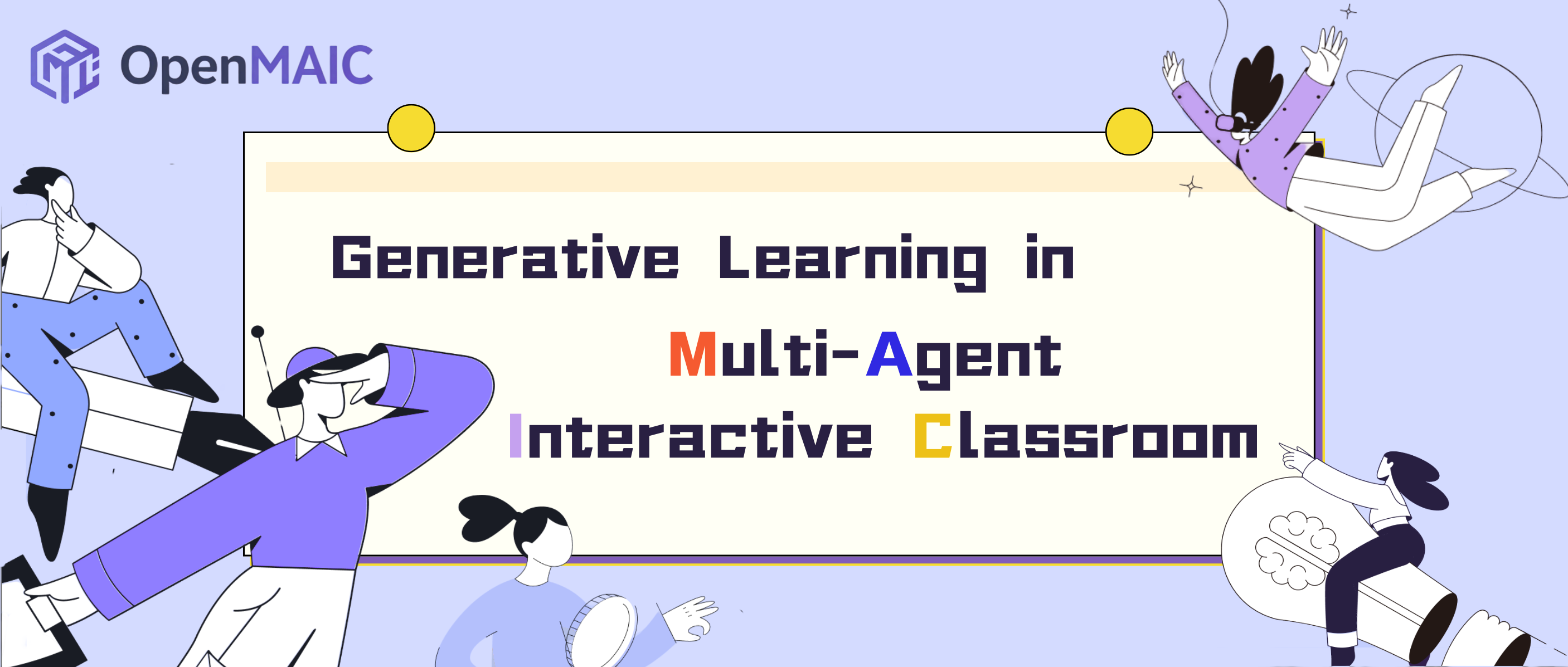
OpenMAIC
Open Multi-Agent Interactive Classroom by Tsinghua University. One-click immersive AI classroom with multi-agent learning experience. Published in JCST'26. Live demo at open.maic.chat. Built with Next.js 16 + React 19 + LangGraph. Vercel one-click deploy. OpenClaw integration. 15K+ stars.
MathClaw
Multimodal math learning assistant for middle and high school. Solving workspace, weakness diagnosis, knowledge graphs, error graphs, auto-summaries. Supports WeChat, QQ, Feishu, Telegram, Discord. From Renmin University.
Benchmarks & Evaluation
PinchBench
Real-world benchmarks for AI coding agents. 23 tasks across productivity, research, writing, coding, analysis, email, memory, and skills. Public leaderboard at pinchbench.com. Auto-grading + LLM judge. Tests what actually matters: tool usage, multi-step reasoning, and practical outcomes.
Claw-Eval
End-to-end evaluation suite for autonomous agents. 300 human-verified tasks across 9 categories (service orchestration, multimodal perception, multi-turn dialogue). Trajectory-aware grading over 2,159 rubrics. Tests Completion, Safety, and Robustness. Used by Qwen, GLM, MiniMax.
ClawBench
Real-world web task benchmark for AI agents. 153 tasks across 15 life categories on 144 live websites. Claude Sonnet 4.6 achieves only 33.3%, GPT-5.4 only 6.5% — highlighting the gap between sandbox and real-world performance. From UBC, Vector Institute, CMU, SJTU, Tsinghua.
ResearchClawBench
Benchmark for evaluating whether AI agents can independently conduct scientific research. 40 real-science tasks across 10 disciplines (Astronomy, Chemistry, Physics, Life, etc.), two-stage pipeline (autonomous research + LLM peer-review scoring), expert-annotated checklists. Score 50 = match human paper, 70+ = surpass it. Supports Claude Code, Codex CLI, OpenClaw, NanoBot, EvoScientist. From Shanghai Jiao Tong University.
BixBench
Comprehensive benchmark for LLM-based agents in computational biology. 205 questions extracted from 60 real-world published Jupyter notebooks (capsules). Tests dataset exploration, multi-step analysis (Python/R/Bash code execution), and scientific hypothesis generation. Supports both agentic and zero-shot evaluation modes. From Future House (PaperQA / Aviary lab).
ClawMark
Multi-day, multimodal coworker agent benchmark. 100 tasks across 13 professional domains (insurance, legal, EDA, etc). Environment changes dynamically — new emails, file updates, schedule shifts. Cross-modal multi-turn with branching logic. Best score only 55%. From NUS, Evolvent AI, HKU, MIT, UW, UC Berkeley, CUHK, HKUST (40+ scholars).
BioAgent Bench
AI agent evaluation suite for bioinformatics. Benchmarks LLM agents on real bioinformatics tasks. Covers sequence analysis, genomics workflows, and computational biology pipelines. arXiv paper.
ClawSafety (Benchmark)
Safety benchmark for personal AI agents under realistic prompt injection. 120 adversarial test cases across 5 harm domains, 3 attack vectors, and 5 harmful action types. Tested Claude, Gemini, GPT-5.1, DeepSeek on OpenClaw/Nanobot/NemoClaw scaffolds. Key finding: chat safety ≠ agent safety.
BioDSA-1K
Benchmark for data-driven biomedical hypothesis validation. 1,029 hypothesis-centric tasks paired with 1,177 analysis plans, curated from 300+ published biomedical studies and grounded in patient-level cBioPortal datasets. Scores agents on four axes: hypothesis decision accuracy, evidence-conclusion alignment, reasoning correctness, and executability of the generated analysis code. Includes non-verifiable hypotheses — cases where the available data can neither support nor refute the claim. Ships inside the BioDSA framework; dataset on Hugging Face under ODbL.
Security
ClawVault
OpenClaw security vault for AI agents. Sensitive data detection (API keys, PII, credit cards, 15+ pattern types), prompt injection defense, dangerous command guard (rm -rf, curl|bash), auto-sanitisation with placeholder restoration, token budget control, real-time web dashboard. Transparent proxy gateway sits between AI tools and external APIs. From Tophant.
ClawSafety (Scanner)
Security scanner for Agent Skills — the npm audit for the Agent-Native ecosystem. Scans for shell injection, hardcoded secrets, unpinned dependencies, excessive permissions, and prompt injection risks. Rust CLI with GitHub App integration. Inspired by the ClawHavoc incident (341 malicious skills).
Skill Evolution Frameworks
SkillOpt
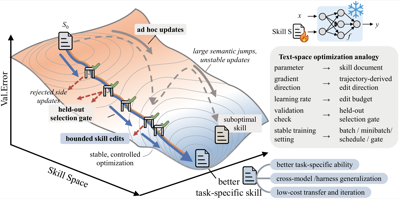
Text-space optimizer from Microsoft Research that trains reusable natural-language skills for frozen LLM agents — like training a neural net but on a Markdown document. Trajectory-driven add/delete/replace edits, validation-gated updates, textual learning-rate budget. Produces a deployable best_skill.md (300-2,000 tokens). Best or tied-best on all 52 (model × benchmark × harness) cells; lifts GPT-5.5 +19.1 inside Claude Code.

TextGrad
Automatic differentiation via text — uses LLMs to backpropagate textual gradients across prompts, skills, queries, and code. From Stanford Zou Group (same lab as Virtual Lab, CellVoyager). Published in Nature. The foundational primitive that newer skill-evolution frameworks (SkillOpt, SkillClaw, DSPy optimizers) compose on top of.
SkillClaw
Collective skill evolution framework from Alibaba DreamX Team (AMAP-ML). Aggregates real-user trajectories across sessions, agents, devices, and users, then runs an autonomous evolver to identify recurring patterns and refine the shared skill library — improvements discovered in one context propagate to everyone. Compatible with Hermes, OpenClaw, Codex, Claude Code, QwenPaw, IronClaw, PicoClaw, ZeroClaw, NanoClaw, NemoClaw, and any OpenAI-compatible API. Validated on WildClawBench; significantly improves Qwen3-Max.
Watching List
Early-stage projects we're keeping an eye on (< 50 stars)🚀
Missing the project in your mind?
Know an AI agent project for scientific research that should be listed here? Submit it and we'll list it!
Submit Your ProjectTakes 30 seconds · Just a GitHub link + one-line description
The Claw Ecosystem in Numbers
A rapidly growing family of AI agent projects powering scientific research worldwide.
159+ Projects Tracked
Projects Tracked
2100+ Skills Indexed
Skills Indexed
12 Project Categories
Project Categories
OpenClaw Ecosystem for Science
Explore curated AI agent skills from the OpenClaw and OmicsClaw ecosystems — covering biology, omics, bioinformatics, and more.
AI Science Agent Benchmarks 2026
Eight evaluation suites compared — task counts, scoring methods, top scores, and which benchmark fits which use case.
The Autoresearch Family Tree
Six forks of one autonomous-research idea, from Karpathy's prototype to MLX, GPU-cluster, and overnight self-improving variants.
The Graveyard Shift
Why science agent projects stop updating — and what the dormant ones tell us about the ecosystem's real health.
Think Like a Nobel Laureate — with AI
Cognitive frameworks from Nobel-winning scientists, packaged as AI skills you can run today.
Ecosystem Report: March Was Wild
Monthly OpenClaw science ecosystem report — fastest-growing projects, new arrivals, dormant casualties, and what shifted in March 2026.
OpenClaw Ecosystem Guide
Evergreen overview of 19+ projects, skill libraries, and tools for scientific research in the OpenClaw ecosystem.
Frequently Asked Questions
Common questions about the OpenClaw science ecosystem.